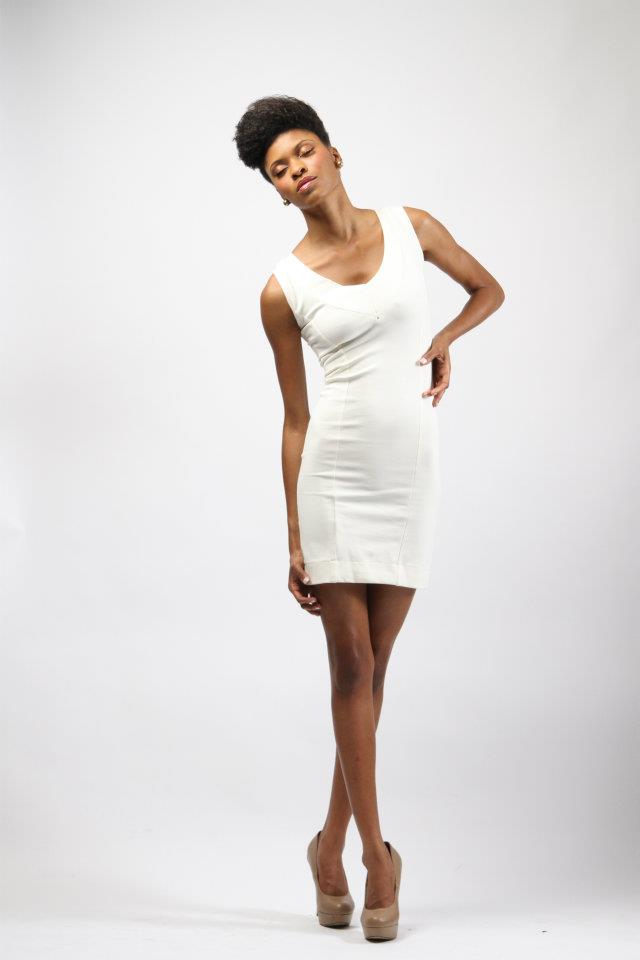
The first time someone in New York looked me up and down and told me I wasn't what they were looking for, I was nineteen years old and standing in a hallway I had traveled eight hundred miles to stand in. I had taken a bus. I had borrowed money. I had left Alabama with the specific and terrifying belief that I was supposed to be there — and within twenty minutes of arriving, someone who didn't know my name or my story had already decided I wasn't worth the conversation.
That was not the last time. Not even close.
I want to be honest about what it felt like to be nineteen and Black and from Birmingham, Alabama, standing in the fashion industry in New York. It felt like being the only person in a room who hadn't gotten the memo that the room wasn't meant for you. Everyone else seemed to move through the space with an ease that had nothing to do with talent and everything to do with familiarity — with having grown up seeing people who looked like them in the magazines, in the agencies, behind the cameras. I had not grown up seeing that. Women like Erika White had shown me it was possible. But possible and present are two very different things.
What “there is no space for you” actually sounds like.
Nobody said those exact words. That is what I want you to understand. The industry is far too sophisticated for that — and far too practiced. What they said was quieter and more corrosive. They said it in the way they looked past me in a room. In the casting calls where I was moved through quickly, politely, without any of the extended conversation I watched happen with other girls. In feedback that was never specific, never actionable — just a shapeless “not quite what we're looking for right now” that offered nothing to improve upon, because improvement wasn't really the point. The point was that I was the wrong shape for a silhouette the industry had already decided on.
I pressed on anyway. I want to say that clearly before I say anything else. Not because I was fearless — I was not. Not because I didn't feel every dismissal in my body — I felt each one, some of them for days. But because I had decided before I got on that bus that I would not let the comfort of staying home become a reason to abandon something I believed in. And I believed, with the specific irrational conviction of a nineteen-year-old who has been told she has something, that I had something.
On how it's really said
“Nobody said there is no space for you. They said it in the way they looked past me. In the casting calls where I was moved through quickly, politely, without any of the extended conversation I watched happen with other girls.”
What Alabama looks like from a New York casting room.
There is a particular kind of condescension the fashion industry reserves for people who come from places it does not consider relevant. New York does not think about Birmingham. The industry produces and consumes its own geography — certain cities, certain schools, certain agencies — and everything outside that map is considered regional at best, quaint at worst. By the end of my first week in New York, I had felt it.
I was asked more than once where I was from. When I said Birmingham, Alabama, the response was usually a brief smile that communicated something I was not supposed to understand but did. It was not hostility. It was more dismissive than hostility — the casual certainty that my geography had already answered something about my potential.
I called home from a payphone once — I tell you this so you understand the era, the financial reality of a nineteen-year-old running thin — and told my mother it wasn't going the way I'd hoped. She listened. And then she said something I have thought about many times since: “The fact that you are there is the thing. Don't let them make the fact that you are there feel like nothing.”
She was right. And it still took everything I had to get up the next morning and go back.
What it cost — and I'm not talking about money.
There is a tax the industry levies on women who don't fit its preferred template, and it is not only a financial one. It is a psychological tax — the cost of maintaining your belief in yourself in an environment actively, if subtly, trying to narrow it. Every dismissal is a small withdrawal from an account you cannot afford to run dry. Every room where you are looked through rather than looked at asks you the same question again: do you actually believe you belong here, or were you wrong about yourself all along?
I was nineteen. I did not have the language for what was happening — no framework to name systemic bias or the documented whiteness of the industry's preferred aesthetic. I just knew I felt smaller at the end of some days than at the beginning, and that I had to actively fight it, because if I let it compound I would go home and not come back.
So I fought it. By remembering Erika White's voice — that we were there to do a job, not to be liked; that professionalism was its own protection; that you could walk into a room where no one wanted you and still walk like you had every right to the floor beneath your feet. I carried it like armor.
On what you can control
“I could not control the fact that the industry had a vision of itself that didn't naturally include me. What I could control was the quality of my presence in every room I entered. The preparation. The professionalism. The walk.”
What pressing on actually means.
I want to be careful here, because I have heard the press-on narrative weaponized — used to tell women, particularly Black women, that the problem is not the system but their own insufficient persistence. I do not believe that. I did not at nineteen and I do not now.
What I believe is more specific: going anyway — when the door is closed, when the room is cold, when the feedback is designed to discourage rather than develop — is worth it not because it will necessarily open the door. Sometimes it won't. Sometimes the door stays closed and the industry moves on and you have to find another door or build one yourself. What going anyway is worth is what it does to you. What it teaches you about your own capacity. What it deposits in you that nobody can take back.
I came home from New York changed. Not because I had conquered anything. Not because the industry had welcomed me. But because I had gone. I had stood in those rooms. I had been dismissed and come back the next day. That is a thing nobody can take from you. The fact that you went. The fact that you stood there.
What I carried back to Birmingham — and what I did with it.
When I came back to Alabama, I came back with something I hadn't had before. Not a contract. Not a booking. What I had was a clearer understanding of what the industry actually was — not the fantasy version from the magazines, but the actual architecture of it. Who holds the power. Who makes the decisions. Where the preferences come from and how deeply they run. Knowing it made me more effective, not less.
I kept working. I kept building my portfolio with Michael Carson. I went back to New York. I went to Atlanta. I built relationships with designers willing to see something the bigger agencies weren't ready to see yet. I walked for Christian Siriano at Gus Mayer. I walked for Rebecca Minkoff. I appeared in film and on television. I was signed with Click Models Atlanta. I landed magazine covers in my home state. None of that happened because the industry changed its mind about what it wanted. It happened because I did not let what the industry wanted become the ceiling of what I was willing to try.
For every young woman who's been told the same thing.
I write this for you specifically. Not for the woman who has had every door opened and every room arranged to receive her — she does not need this. I write it for the woman who was told the room wasn't built for her. The woman who got on the bus anyway. The woman reading this in a city the industry doesn't think about, with a dream it hasn't sanctioned, with a body or a background or a face or a geography the current version of the industry has decided doesn't fit.
Here is what I want to tell her: the dismissal is not information about you. I know it feels like information. I know how it lands in your chest and sits there. But the specific preferences of an industry that spent decades excluding almost everyone who looked like us is not a reliable guide to what you are capable of or what you are worth or what you will eventually build.
Go anyway. Go with your eyes open — don't romanticize it, don't pretend it won't cost you, don't let anyone sell you the version where persistence alone overcomes every structural barrier. It doesn't. Some doors stay closed. All of that is true, and none of it is a reason not to go. Because the industry is not the only place your talent can land. And the women who figure that out — who use what the industry taught them without being imprisoned by what it wanted them to be — are the ones who end up building things that outlast any single casting call or magazine cover.
I left Alabama at nineteen. I was told there was no space for me. I stayed in those rooms longer than they wanted me to. I came home. I kept going. I am still going. The fact that I went is the thing. And the fact that you go — whatever door you are standing in front of right now, whatever voice is telling you there is no space — the fact that you go is the thing too.
Don't let anyone make that feel like nothing.
— Infinity